West · Coast
Elafonisi and Balos, the pink-sand lagoons
Two of Crete's most photographed beaches sit at the island's far western tip, and both reward the same stubborn discipline: get there by nine, or don't bother. Here is what each one is actually like once you do.
The first time we drove out to Elafonisi we left Chania at eight, pleased with our early start, and met the first coaches coming the other way before we reached the lagoon. They had left earlier. That, in one line, is the lesson of the western beaches — whatever hour you think is early, somebody has decided to beat it.
Elafonisi and Balos are not the same kind of place, despite being lumped together on every list of Crete's best beaches. One is a shallow tongue of pink-blushed sand you can wade across; the other is a wide lagoon behind a peninsula, reached down a goat track or by a boat that doubles as a small adventure. What they share is colour — that improbable, swimming-pool turquoise — and a midday crowd that tests your patience if you arrive at the wrong moment.
What turns the sand pink
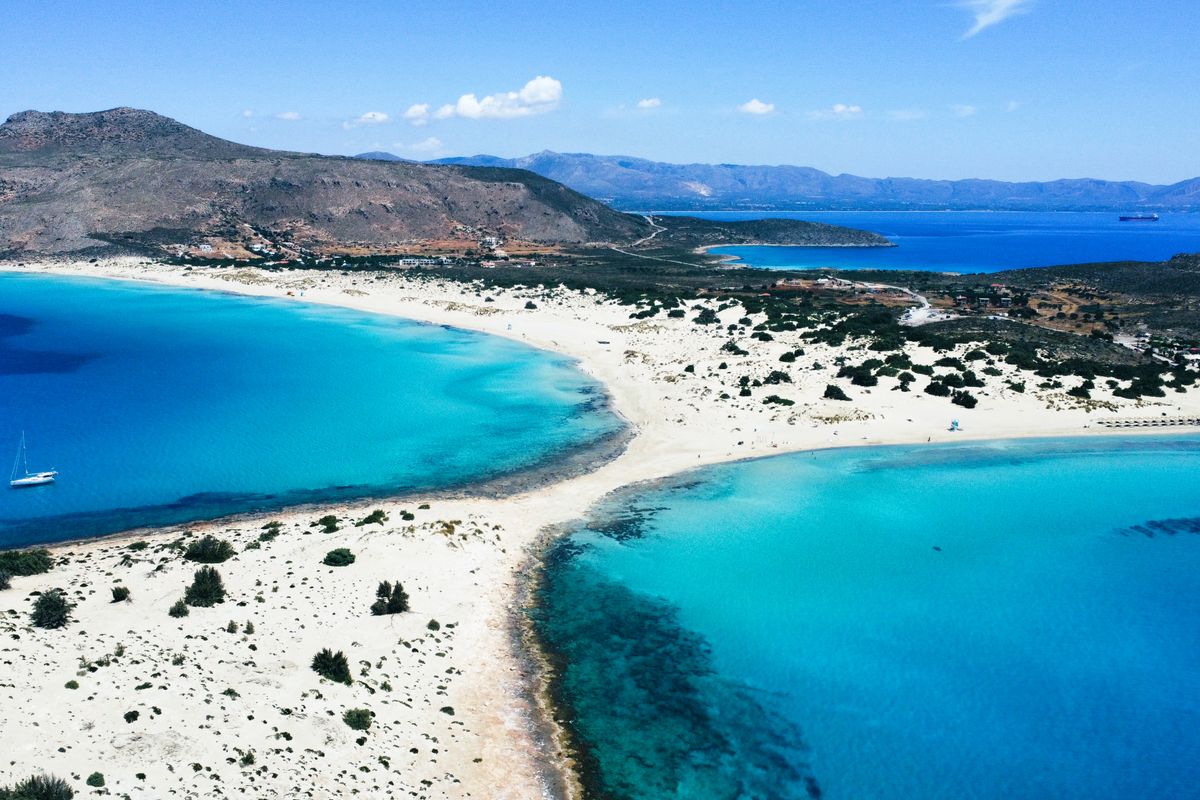
The pink at Elafonisi is real, though it photographs stronger than it reads in person. Crushed shells of tiny marine organisms — foraminifera, if you want the word for the pub quiz — get ground into the white sand along the waterline. Expect it to be patchy. Some mornings whole stretches of shore glow rose; other days you crouch at the tide line to see the blush at all. Weather, footfall, and where the sea drops shell fragments all play a part.
This whole corner is a protected Natura 2000 site, which matters for more than bragging rights. Loggerhead turtles nest on the dunes, and the rules ask you not to trample the marked vegetation or — please — pocket the pink sand. Enough people have done exactly that to make it a genuine problem. Walk the boardwalks, swim, leave the sand where it is.
Wading across to the islet
Geography is the fun part here. Elafonisi proper is a low islet just offshore, separated from the mainland by a lagoon so shallow you can walk across it. At its deepest the crossing reaches the waist; mostly it barely clears the knee. Hold your phone overhead, mind the gusts, and you are over in a couple of minutes onto a wilder, quieter stretch of dunes and coves.
It is lovely. It is also exposed. The west coast catches wind, and on a blowy afternoon the lagoon turns choppy and the sand moves sideways into your sandwiches. We once sat through a sunny day made almost unbearable by the gusts alone. If the forecast shows strong westerlies, temper expectations or pick a sheltered cove on the islet's far side.
By half past eleven the car park is a slow-moving argument and the shallows are wall-to-wall with floats. By half past four it empties out again. The beach is the same beach at both hours — only the crowd changes, and the crowd is the whole experience.
Getting to Elafonisi without losing the morning
From Chania it is roughly 75 kilometres but budget an hour and a half. The road climbs through the Topolia gorge and a tunnel, then twists down to the coast in switchbacks that some passengers love and others quietly hate. A good drive, not a fast one. A seasonal bus runs from Chania in the warm months — early departure, late-afternoon return — which suits anyone without a car but locks you into the schedule and, often, the busiest hours.
Our flat recommendation: drive, and leave Chania no later than seven if you can stand it. The reward is an hour of the lagoon nearly to yourselves before the first coach disgorges. By the time the masses arrive you are damp, happy, and thinking about second breakfast. For the wider question of cars versus buses versus boats, we weigh the trade-offs in getting around Crete.
Balos: the lagoon behind the peninsula
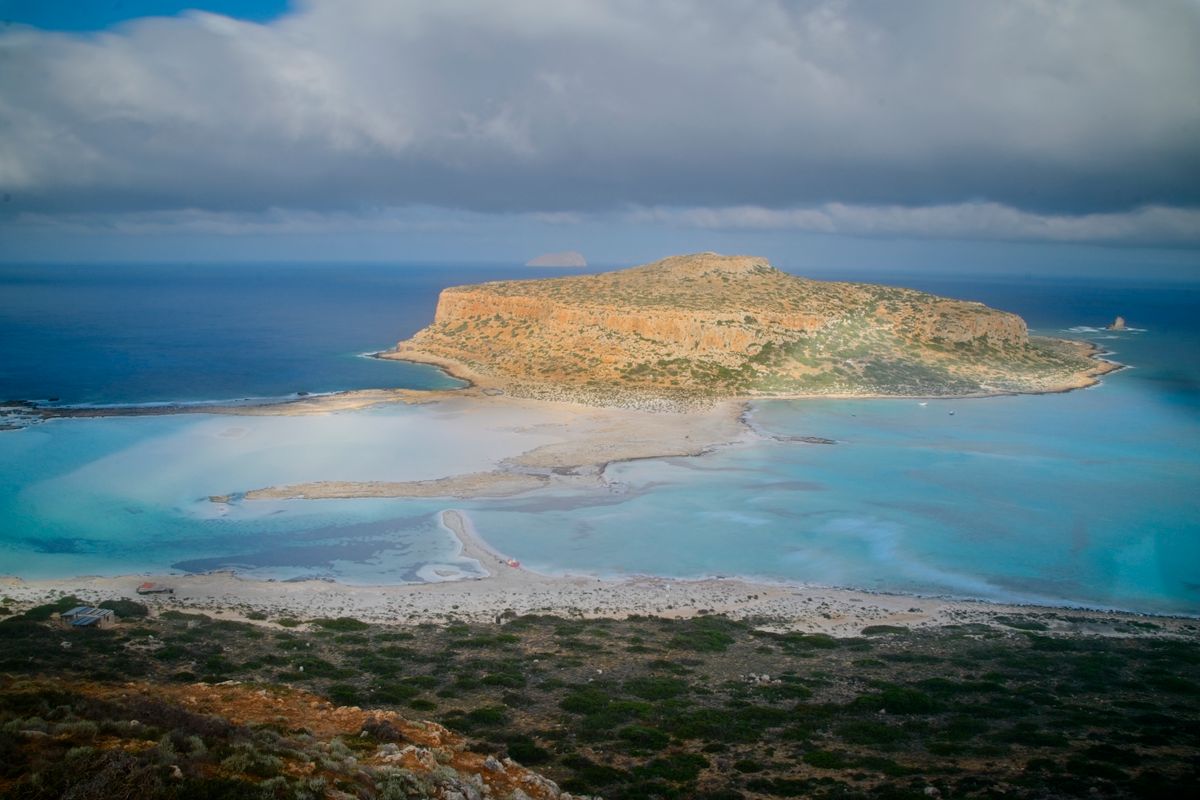
Balos sits up on the Gramvousa peninsula, the long bony finger of land that points off Crete's northwest tip. The lagoon forms where a flat sandbar links the mainland to the rocky islet of Tigani, trapping a sheet of warm, shin-deep water that reads turquoise and pale rose from any height. It is, frankly, the more spectacular of the two — the view makes people go quiet when they crest the ridge above it.
Getting there is where Balos earns its reputation. Two ways in, and they are not equal.
- By road, then on foot. Past the village of Kaliviani the tarmac gives out and you commit to a rutted dirt track for several kilometres to a hilltop car park (small fee; a standard car will survive it but won't enjoy it), then a steepish walk down to the sand, maybe twenty to thirty minutes each way. Doable, free of any timetable, but a genuine bone-rattler — and the descent in midday heat is no joke.
- By boat from Kissamos. The cruise leaves Kissamos port, runs about an hour each way, and usually pauses at Gramvousa — the pirate island with its Venetian fortress and a shipwreck rusting in the bay — before anchoring off the lagoon. You climb the fort for the postcard view, then get a few hours on the sand. More money, fixed schedule, but no dust and no clutch-burning descent.
We have done both. If pressed, the boat wins for most people: you trade some cash and flexibility for the fortress, the wreck, and a clutch that lives to see another day. The road suits you if you want your own clock and have nerves for the track. Either way the lagoon is the same astonishing thing once you stand in it.
Tigani means "frying pan" in Greek, which tells you precisely how much shade Balos offers in August: none worth the name. Whatever you bring is the shade you get.
Bring everything, expect nothing on site
This is the part the brochures skate over. Both lagoons run on what you carry in. Elafonisi has a canteen or two and a stretch of rented loungers; Balos has little more than a single drinks shack. Plan as though there is nothing.
- Water — more than you think, then a bit more. Neither beach is a place to ration it.
- Shade you can carry: an umbrella, or at least a hat and a long-sleeve cover-up. The sun off pale sand and shallow water is relentless.
- Reef-safe sunscreen and a dry bag for the Elafonisi wade.
- Cash for the parking fee and the canteen — card readers are a coin-toss out here.
- Shoes you can walk a dirt path in, especially for the Balos descent.
For the loggerheads and monk seals that use these shores, the standard line holds: don't disturb the dunes, take your litter out, give nesting markers a wide berth. Those protections are part of why the place still looks the way it does.
So, are they worth it?
Yes — both, without hesitation — provided you go in clear-eyed about the crowds and the logistics. At opening, in decent weather, Elafonisi and Balos are among the most beautiful stretches of coast in the Mediterranean. At one in the afternoon in peak August, car parks full and shallows thick with bodies, they can feel like a queue with a view. It comes down to the hour on your watch.
Pair a western-lagoon day with a slower evening in Chania's old town — the harbour at dusk is the gentle antidote to a sunburnt afternoon. Start early, drink more water than feels reasonable, and let the crowds have the place once you have had your two perfect hours.