East · History
Spinalonga, the island with a hard memory
A Venetian fortress that outlived an empire, then spent half a century as the place Crete sent its sick. Few short crossings on the island carry this much weight.
From the water Spinalonga looks like a mistake the sea forgot to finish: a low brown rock ringed by ochre walls, the green of the Mirabello gulf going almost neon over the shallows. The official name is Kalydon, though no one we met used it. Everyone says Spinalonga, and everyone means the same thing — the island where the lepers lived.
That is the line the boatmen lead with, and the line most visitors arrive carrying. It undersells the place. Spinalonga has been a frontier fort, a refugee town, and a colony of the sick, and you can read all three in about an hour of walking — if you slow down enough to let the layers separate.
What the Venetians built, and why they hung on
The fortress went up in 1579, laid over the ruins of an older acropolis on the same rock. Venice had held Crete since the early thirteenth century and could feel the grip loosening; Spinalonga was one of the last defences they raised, a bastion fort designed to stop any landing in the gulf cold. The engineering still reads clearly — a ring of wall hugging the waterline, blockhouses on the high ground, gun positions angled to rake the approaches.
It worked better than the rest of the island did. When Crete fell to the Ottomans in 1715 the agreement handed Spinalonga over too, but it had held long after Candia itself was lost — a Venetian island in an Ottoman sea, the last of its kind here.
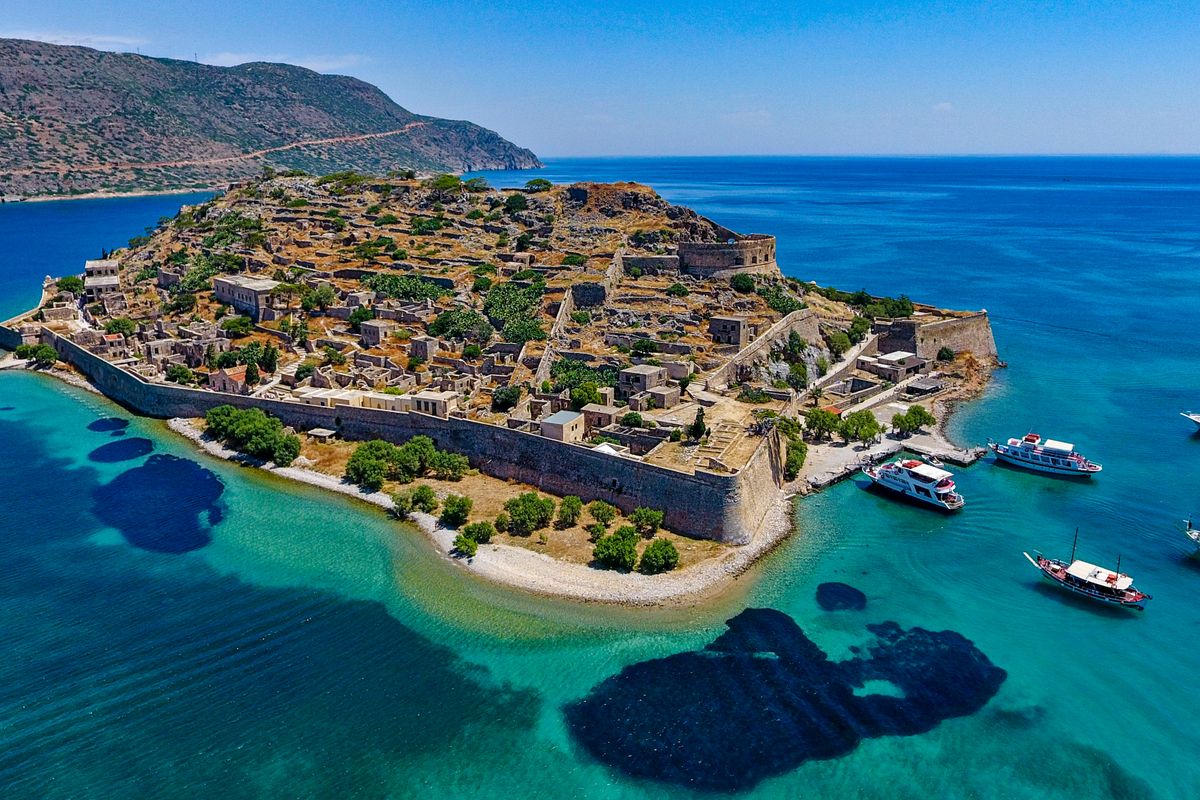
After 1715 it became something stranger. Muslim families settled inside the walls and a proper village grew — houses packed tight along the lanes, a bazaar, the ordinary clutter of people living behind military stonework. Most left after the Ottoman defeats at the close of the 1800s, and the last were gone by 1903, the year the island changed jobs again.
The colony, 1903 to 1957
In 1904 the new Cretan State turned the empty fortress into a leprosy hospital, and the first patients — a couple of hundred of them — were rowed across that autumn. Spinalonga became one of the last leper colonies anywhere in Europe, and it stayed open for more than half a century.
People were sent here, not invited. The word the locals used for them was unsparing — the living dead — and you should sit with that rather than skate past it. And yet what grew on the rock was not only misery. Residents elected leaders, ran shops, kept a chapel, published a newspaper, married, raised children who were taken away if they were born healthy. A society assembled itself out of people the mainland had written off.
The cruelty was not the island. The island was beautiful. The cruelty was the boat that brought you and never came back for you.
The arrival is the part everyone repeats. New residents came in through a vaulted tunnel cut into the wall, nicknamed Dante's Gate — whoever passed through had no notion of what waited on the far side, the way the poet steps into the dark. Historians will tell you the name has thin documentary roots and the one inscription that survives reads, plainly, "Boulevard of Pain." Walk the tunnel anyway. The drop in light and temperature as the stone closes over you does the storytelling without any help.
A cure arrived in the early 1950s, and in 1957 the remaining patients were moved to a hospital near Athens. One person stayed on a few more years — a priest, by most accounts, seeing out the dead — and the island emptied for good around 1962.
Reading the ruins, street by street
Restoration has put a usable spine back into the place. The main street is cleared and walkable, lined with the shells of houses and shops, and signage marks out the church, the hospital block, and the disinfection room where new arrivals and their possessions were scrubbed before being let in. Nothing is over-restored or theme-parked, which is the right call — roofless rooms with the plaster still flaking say more than any reconstruction would.
A loose route that works:
- Through the tunnel first — take it slowly, in the quiet, before the next boat unloads.
- Up the main street past the houses to the church, which is small and still consecrated.
- The disinfection room and hospital buildings, the bluntest evidence of how the place actually ran.
- The high path along the Venetian wall for the gun positions and the long view back to Plaka and the mountains.
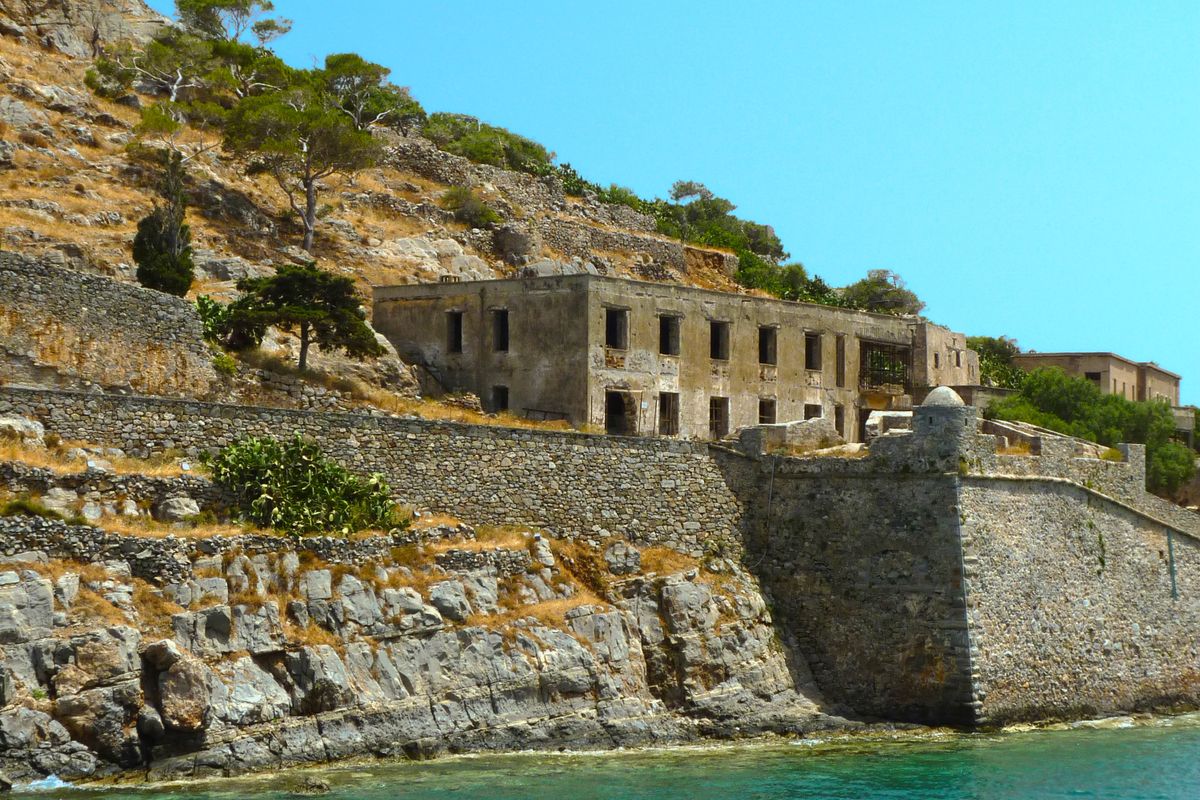
If the colony grips you harder than expected, there's a reason much of the boat traffic exists at all. Victoria Hislop's novel The Island, and the Greek series made from it, sent a wave of readers here to stand where the story happened; surveys on the island find a sizeable share of visitors come precisely because of the book or the show. Read it first if you can. It turns a row of empty doorways into specific lives, and the hour ashore lands differently afterward.
Getting across without overpaying
Boats run all day in season from three places, and the choice mostly comes down to how much water you want to cross. From Plaka, the little village straight across the channel, the hop is about ten minutes and the cheapest of the three — this is the one to take. Elounda is a slightly longer, slightly dearer ride. Agios Nikolaos turns it into a half-day boat trip down the gulf, scenic but slow, and you pay for the scenery.
Budget roughly €8–10 for the return boat from Plaka, plus a separate site entry fee charged when you land. Crossings are frequent enough that you rarely wait, and there's no need to pre-book from Plaka — walk down to the jetty and the next caïque takes you.
The island is bare rock with almost no shade and no shop selling anything once you're across. In July and August it bakes, and the late-morning boats land everyone at once into a slow shuffle up the main street. Go on the first or second crossing of the day, carry water and a hat, and you'll have the tunnel and the high wall to yourself for a while.
Worth it, and how to do it right
Yes. Of all the day trips off the east coast this is the one that stays with you, and it pairs naturally with an afternoon in Elounda or a wander through nearby the villages up toward the Lasithi plateau if you want the day to keep going. Cross from Plaka to save both time and money, go early to beat the heat and the crowds, and give the colony the hour it asks for rather than the twenty minutes a tour allows.
One last thing. It is tempting to treat Spinalonga as a sad attraction, photograph the pretty walls, and leave. A harder, better visit lets the disinfection room and the empty church do their work. The people sent here were not characters. They lived whole lives on this rock, in sight of a coast they could not return to — and the island remembers that more honestly than most monuments manage to.
For more on the practical side of moving around this corner of the island, the Discover Greece rundown is reliable, and the fortress's listing on the UNESCO tentative list lays out the architecture in detail. The full history, including the disputes over the Dante's Gate story, is well covered on Wikipedia.